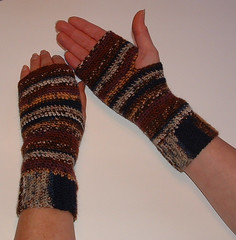
As many of you know, I’m really into creating basic patterns that are easy to make. With that in mind, I set out to create some crocheted fingerless gloves. I love to work in the round, without joining or seams if possible. So here is my basic and very simple crocheted fingerless glove project.
After making this basic crocheted pair of fingerless gloves, I decided that I would try adding a bit of a thumb to it. Below is the pair of gloves that I crocheted with the optional thumb.
The second pair of gloves were crocheted just a bit smaller by only doing 40 rows of ribbing and 40 stitches along the edge for the body of the glove. This resulted in a 1/4 inch smaller cuff and finger opening area. I mention this as a way to show that this pattern can be adjusted for smaller hands by just reducing the number of stitches on the ribbing. Likewise, you could make larger gloves by just increasing the number of stitches of the ribbing when you begin the pattern.
Each pair of gloves use just one skein of yarn and do work up very quickly. As always, I hope you enjoy my free pattern and happy crocheting to all!
***************************************************************************************************************************************
Basic Fingerless Glove Crochet Pattern
Yarn:
Red Heart Heart & Sole Yarn, Super Fine, Toasted Almond, 1.76 oz (50 g)
Hooks:
F (3.75 mm) size crochet hook
G (4-4.25 mm) size crochet hook
Description:
Women’s Medium sized fingerless gloves
Measurements: 8-3/4 inches long, 3-1/2 inches wide at cuff & 4 inches across at palm.
Directions
Make 2 gloves as follows:
Using F hook for ribbing, leave a long tail and ch 15.
Row 1
Sc in 3rd ch from hook and in ea st down to the end. (13 Sc)
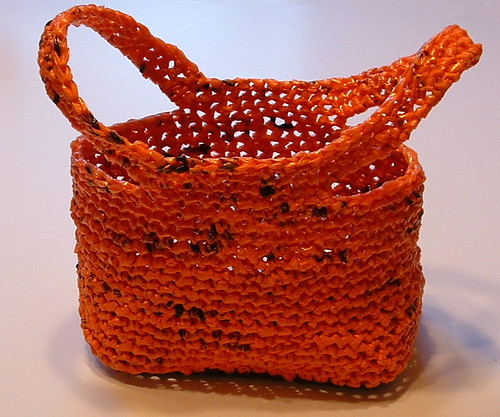
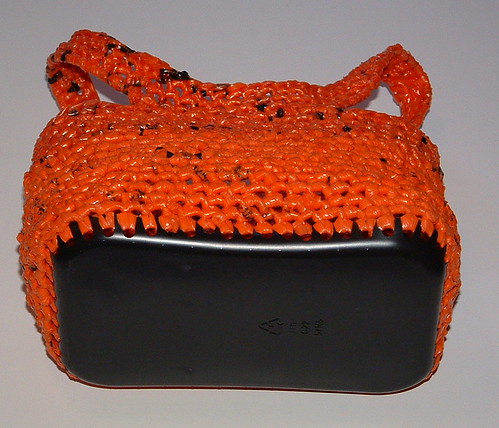
Using these orange plastic bags to create a trick or treat bag was a great way to recycle my newspaper bags. Here is my picture tutorial for cutting the newspaper bags to create plarn so you can crochet with the material.
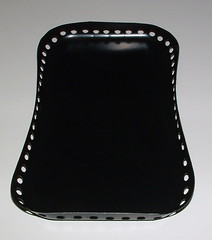
For this project, I wanted to create large comfortable handles that could be put over a child’s arms for easy carrying of this basket type bag. I recycled a microwave dinner tray and cut the top rim off. I then hole punched around the base evenly so I could crochet into the plastic tray for the base of this bag. The dinner tray provides a flat and sturdy bottom to the bag which allows the bag to stand up nicely on its own.
Enjoy crocheting this recycled bag project and happy Halloween everyone!
***************************************************************************************************************************
Free Crocheted Pattern for a Recycled Plastic Trick or Treat Bag
Materials needed:
Orange plastic bags cut into 1 inch strips for plarn (approx 25 newspaper sacks used)
1) Plastic frozen dinner dinner tray with the rim cut off
(One used in project was 6-3/4 inches long & 3-1/2″ wide)
Hooks:
G (4-4.25 mm) sized metal hook for base row only
J (6 mm) sized metal hook
Description: Recycled Plastic Halloween Trick or Treat Bag
Bag measures 7 inches long, 5 inches wide and 6 inches tall with 8-1/2″ handles
Directions:
Using the tray after cutting off the rim, punch holes around the base as shown in the photo.
I used a heavy duty hole punch to put the holes around the base.
October 11, 2011 Comments Off on Three Years Later
October is breast cancer awareness month. It just so happens that it has been three years since my diagnoses of breast cancer. And it’s been exactly three years ago that in October of 2008 I finished up my cancer treatments. I haven’t written about what I called My Pink Journey in quite a while so this milestone seems like a good time for an update.
I am thrilled to report that I am cancer free. I just completed recent scans and everything is clear. Many people refer to this as NED (no evidence of disease) and we cancer survivors all love to say that we are dancing with NED. We all hope to continue to be dancing with him forever if possible.
I’ve heard it said that time heals us and while most of my physical issues from cancer have healed, it’s what remains that sometimes fills my thoughts and lingers in the back of my mind as I move forward with my life again after cancer. I’m sure its the same for other people that face this beast, you just hope and pray it never returns.
So as a reminder don’t forget to be diligent against this formidable foe. Self-exams are so important as no one knows a woman’s body better than herself. After all I found my own tumor and even my doctor didn’t think it seemed like anything until after a biopsy confirmed my cancer.
As I reflect back over the last three years, I think the most important thing I want to say is that cancer didn’t beat me. You do learn not to think about it every waking moment. You can get your life back. You are able to return to a new normal in your daily routines. And with the help of my faith, family and friends I am a stronger, better person today for having faced cancer.

This doll bunting pattern was adapted and printed with permission from Sue Thomson who designed a baby bunting for a newborn. Her free crochet pattern can be found here. After re-working the pattern several times, I finally got the right fit for a baby doll that is about 13 inches tall.
I crocheted the doll bunting and added a stocking cap to finish off the outfit. The hat is more of a sleeping cap for this outfit but the crochet pattern can be used for any doll that has a 10-1/2″ head circumference.
Enjoy the free doll bunting pattern below and happy crafting to all!
******************************************************************************************************************************
Baby Doll Bunting Pattern
Fits a 12-13″ Baby Doll
Bunting measures: 5″ wide between armholes, 6″ sleeve openings,
10″ around at neck and 14″ long
Hook: Metal G (4-4.25 mm) crochet hook
Materials:
2.75 oz – worst weight yarn (Purple Puff used)
Small amount of white yarn for trim
One – 1/4 inch button for back closure
Directions:
Ch 34
Row 1
Dc in 3rd ch from hook. Dc in next 5 sts, (Dc, ch 1, Dc) in next st; Dc in next 6 st, (Dc, ch 1, Dc) in next st; Dc in next 6 st, (Dc, ch 1, Dc) in next st; Dc in next 6 sts, (Dc, ch 1, Dc) in next st and Dc in last 5 sts. Ch 2, turn.
It is with great pleasure that I present to you my new and improved pattern page here at My Recycled Bags. With the help of my son, we have updated the old page with a thumbnail photo of each project and tutorial for easier access. The page is laid out by categories and materials now so you can quickly navigate the list of projects that you may be in search of.
It was fun and interesting as I went back over the nearly 5 years of patterns and posts that I have created here at my blog. I had forgotten about some of the older less used patterns as well as re-visiting the early creations I made with recycled materials.
So without further ado here is My Pattern Links page. I hope you enjoy using it and find it easier to locate my many different patterns that I provide free here at My Recycled Bags.
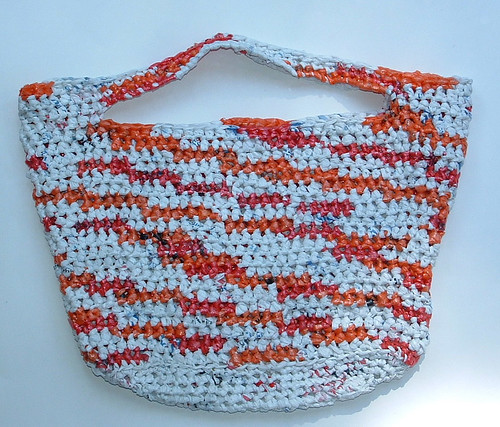
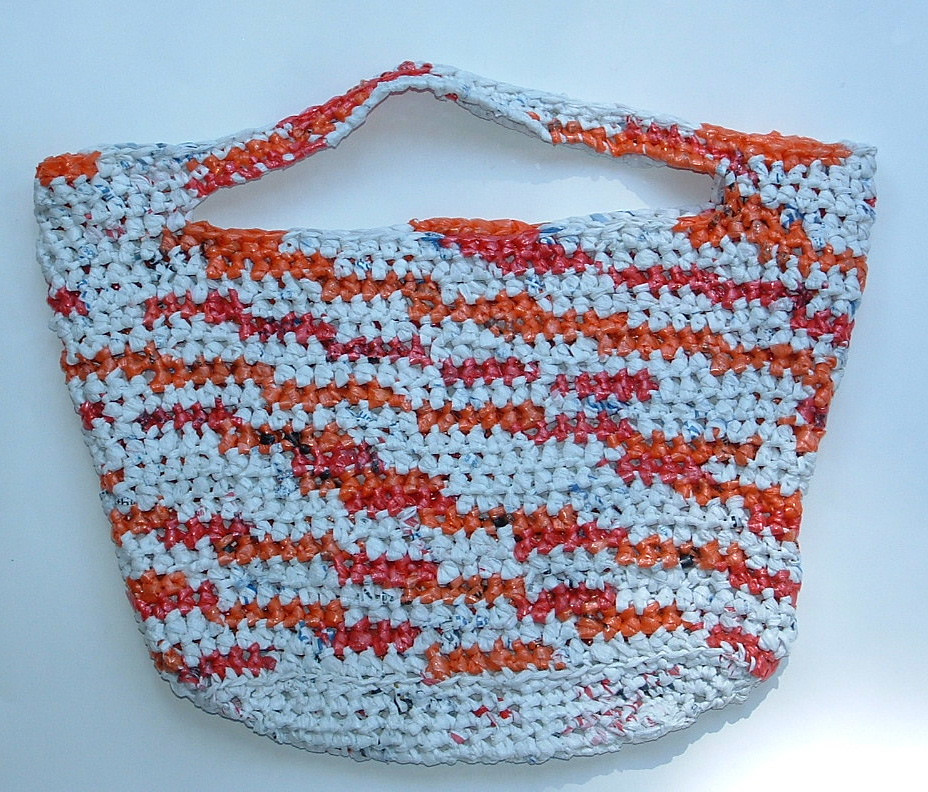
I present my latest creation — Variegated plastic bag yarn or plarn as it so commonly is known as in the crafting world. Pink, orange, and white plastic bags were used to crochet this variegated recycled bag. The pink and orange bags are plastic bags that newspapers are delivered in and the white is from just regular retail bags. I used these 3 colors to create my variegated look by assembling 3 loops of pink plarn, 2 white loops, 3 orange loops, and 2 white loops, then repeat this order for the variegated look. Here is my plarn making tutorials for creating yarn from newspaper or retail plastic bags should you need to see how to make plastic yarn.
This plarn ball was made using newspaper and retail bags together to create the variegated colored yarn. As I outlined below, if color pooling becomes a problem just add another white strip of plarn to offset the pooling. I found if I added an additional white strip to the 2 white ones, it solved the pooling issues with the tote bag as I crocheted it.
Enjoy the free crochet pattern below and happy crafting to all!
**********************************************************************************************************************************
Variegated Plarn Tote Bag Pattern
Materials needed:
Plastic bag yarn or Plarn – Approx. 50 white plastic grocery bags along with 20 pink and 20 orange plastic bags for the variegated yarn
This variegated plarn is created by assembling 3 loops of pink plarn, 2 white loops, 3 orange loops, and then 2 white loops, repeat pattern for variegated look.
Hook: N (9 mm) size metal hook
Description: Recycled Plastic Tote Bag
Bag standing up measures 14″ wide and 11″ tall with 12″ handles
with measurements flat 17″ across, 12″ high, and 11″ long base.
Directions:
The bottom of bag is crocheted with just plain white bags. Using just white plarn, Ch 20.
Rnd 1
Sc in 2nd ch from hook and in ea chain st down to end. Continue around other side of chain by working a Sc in ea st to other end.
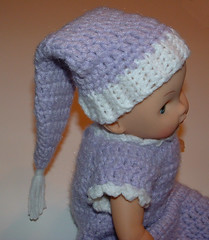
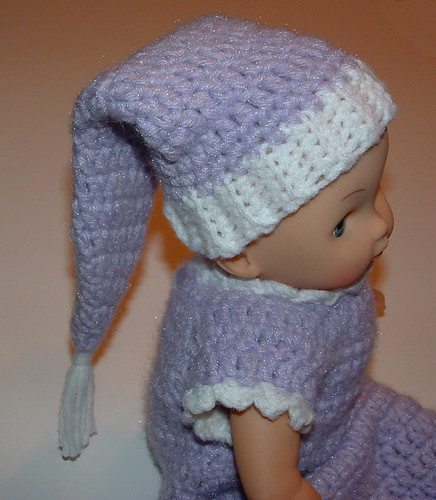
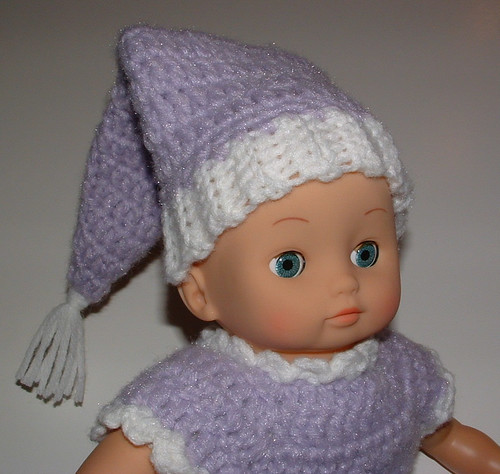
I designed this doll stocking cap as a sleeping cap for a baby doll. It fits a 12-13″ doll with a head circumference of 10-1/2 inches around. I wanted to share this quick crochet project as it’s a fun little hat to add to a baby doll clothing set. I crocheted this hat to go along with the doll bunting outfit I made for my granddaughter’s doll.
*******************************************************************************************************************************************
Doll Stocking Cap Pattern
Fits a 12-13 inch doll or any doll that has a 10-1/2 inch head circumference
Hat measurement flat: 4-7/8 inches wide across opening and 10 inch long
Hook: Metal G (4-4.25 mm) sized crochet hook
Materials:
1 to 1-1/2 oz – worst weight yarn (Vintage Purple Puff WW)
Small amount of white yarn for ribbing band and tassel
Directions:
Using white yarn Ch 7.

I crocheted these scrubbies using recycled plastic bags that were cut into plarn. It reminds me so much of sea coral that I just had to call the scrubbers scrubbie coral. The inspiration for these scrubbies came from my friend Kristy who shared her cotton scrubbies at her blog Texiles4you.
People ask me all the time about the amount of plarn created by each plastic bag and while it may differ with one type of plastic bag to another, I found the standard white retail bags yield me about 7 yards of plarn when cut them 1″ wide and assembled using the looping method. The orange plastic newspaper bags provided me with 6 yards due to their smaller size.
With that in mind, you need 4 plastic bags to make each one of these scrubbies. The white scrubbies were crocheted just 4 rounds. I found I liked a bigger scrubbie so I crocheted the orange one five full rounds. By crocheting 5 rounds you use all of the plarn created from the 4 plastic bags where the smaller scrubbers only use a little over 3 bags.
You will find as your crochet each round that it begins to twist which is normal. The more rounds you crochet, the more twist you get. Have fun with the colors and mix and match them. I plan to crochet more of these scrubbies and add a different color just on the final round which should create an even more unique coral look for the scrubbies.
***************************************************************************************************************************
Plarn Scrubbie Coral Pattern
Materials needed:
Plastic bag yarn or Plarn 4 plastic bags cut into 1 inch wide strips
as shown in my plarn making tutorial
Hook: N (9 mm) size metal hook
Description: Recycled Plastic Scrubbie
Scrubbies are about 3-1/2 – 4″ wide depending on if you do 4 or 5 rounds
Directions:
Rnd 1
Ch 2 and work 8 Sc in the 2nd ch from hook. Do not join and continue working in rounds. Use a stitch marker if necessary so you know where each round starts.
Rnd 2
Work 2 Sc in each st.
Rnd 3-5
Work 3 Sc in ea st.
Option: For a smaller scrubbie, crochet just 4 rounds.
If you have any questions or find discrepancies in this pattern, please email me using contact tab above.
Abbreviations:
Ch – Chain
Ea – Each
FO – Finish Off
Hdc – Half Double Crochet
Inc – Increase
Plarn – Plastic Bag Yarn
Rnd – Round
Sc – Single Crochet
Sk – Skip
Sl St – Slip Stitch
St – Stitch
This pattern is copyrighted by Cindy of My Recycled Bags {dot com} and may only be used for private individual use. No commercial sales or use is permitted. Links to this pattern are acceptable. ©2011
****Please do not copy my patterns on your blog site or post my patterns on Internet sites. I do not allow my patterns to be republished without expressed written permission. Posting of my patterns, without […]
I have wanted to make my own laundry soap for so long. I finally assembled the materials and supplies necessary to make my first batch of homemade laundry soap. Below I have outlined the process and results I obtained from my first attempt at laundry soap making.
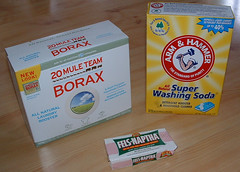
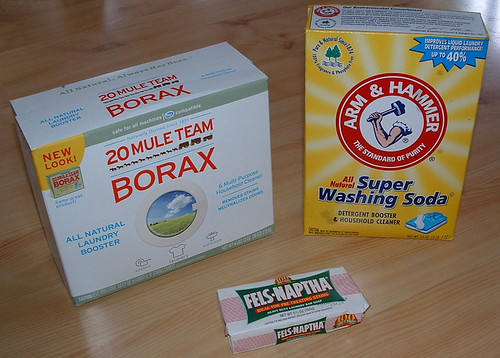
After researching and reading many blog posts about making ones own laundry soap, I settled on the recipe that uses washing soda, borax, and Fels-Naptha bar soap. There are many different recipes with a few different changes for each homemade laundry soap if you research it. I followed this blog’s homemade laundry recipe to make my laundry soap using the following supplies to make a 2 gallon bucket of soap.
Supplies:
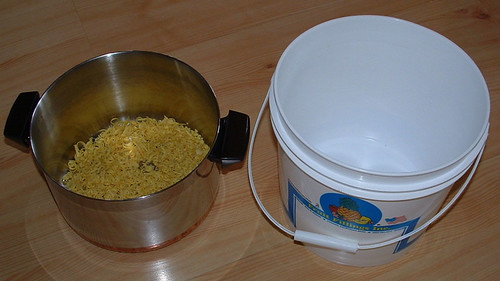
Large metal cooking pot at least 4 quarts or bigger
2 gallon plastic bucket for final soap container
1/3 bar of Fels-Naptha laundry soap
1/2 cup Arm & Hammer washing soda
1/2 cup 20 Mule Team borax powder
Directions:
Grate 1/3 of the bar of Fels-Naptha soap and place in cooking pot. Add 6 cups water and heat gently over low to medium-low heat stirring occasionally until the soap melts. Remove from heat. Then add the washing soda and the borax stirring until all ingredients are dissolved.
Pour 4 cups hot water into the plastic bucket. Now add the cooked soap mixture to the plastic bucket mix and stir well. Add 1 gallon plus 6 cups of water to the plastic bucket mix and stir well again. Let the soap mixture sit at least 24 hours to gel. It doesn’t gel to a firm consistency but more like a runny egg white. I use about a half of a cup of soap to wash in my extra large top loader washer. The soap works great on spots too if you just apply a bit to any stains on your clothes.
Below you will find additional photos that show each step from above. Click on any photo to super-size it.
Here is 1/3 of a Fels Naptha bar of soap grated and ready for the cooking stage.
6 cups of water added for the cooking stage.
Homemade laundry soap with all water added and stirred in bucket.
Final result of laundry soap after setting up for 2 days.
Bottom line on this homemade soap — I love it. It works well and if you add a half cup of white vinegar to your final rinse cycle you won’t have any static cling and my line-dried clothes were soft too. I do think when I make this again I will cut down on the water to make a more concentrated soap. My final soap mix was a bit too runny but still works fine. I think if you add just the 1 gallon of water at the end and eliminate the last 6 cups of water, you would end up with a much better consistency of soap. Also this laundry soap is a low sudsing soap so don’t be alarmed when you don’t see […]





Recent Comments